.png)


.png)
Have you ever found yourself trapped in an uncomfortable silence, desperately searching for something—anything—to say? Or perhaps you've watched a conversation spiral into a stilted exchange that feels more like a job interview than a pleasant interaction. We've all been there, caught in that purgatory between superficial greetings and meaningful dialogue.
Small talk doesn't have to feel like pulling teeth or conducting a therapy session. What if there was a simple framework that could transform those awkward moments into opportunities for genuine connection? Enter the FORD method—a conversational approach so natural that the other person won't even realize you're using a strategy.
What is the FORD Method? Your Framework for Effortless Conversation
The FORD method is a conversational framework that stands for Family, Occupation, Recreation, and Dreams. This simple acronym provides four universal pillars of conversation that work in virtually any social situation—from networking events to first dates, casual meetups to family gatherings.
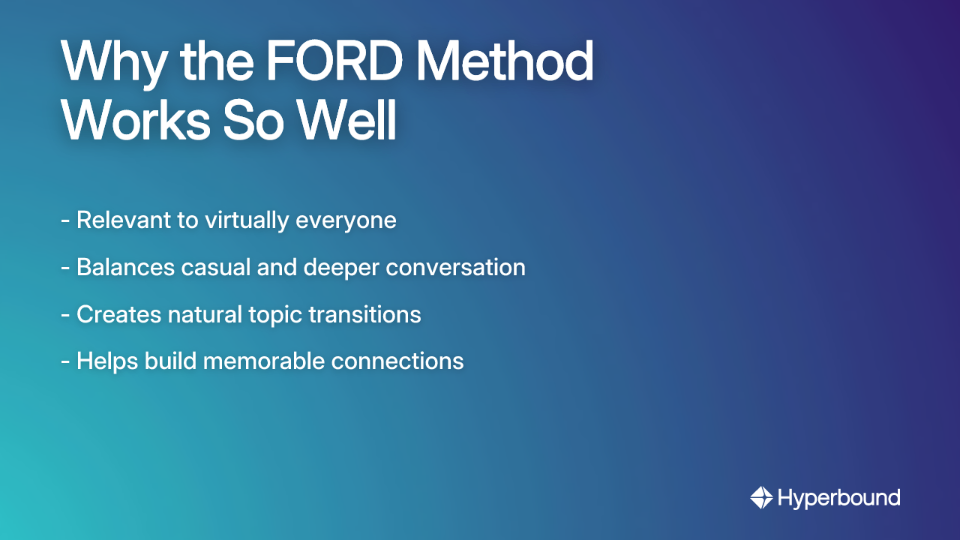
Unlike scripted icebreakers or cliché questions that often lead to dead-end replies, the FORD method creates a flexible structure that encourages natural flow while preventing those dreaded awkward silences. It works because these four areas:
- Are relevant to almost everyone
- Allow for both light, casual questions and deeper exploration
- Provide natural transition points between topics
- Help you remember what matters to people, strengthening relationships over time
As Harvard Career Services notes, "The FORD method gives you reliable conversation topics to fall back on when you need them, helping you avoid awkward silences and build meaningful connections."
Let's break down each component of the FORD method and explore specific questions and approaches that will transform your small talk into engaging conversations.
The FORD Toolkit: A Deep Dive into Each Topic
F is for Family
Family discussions create instant relatability because family experiences—whether positive or challenging—are universal. This category can include immediate family, extended relatives, chosen family, and even beloved pets.
Effective questions about family:
- "Do you have any siblings? What are they like?"
- "How did you meet your partner/spouse?"
- "I noticed your phone background. Is that your family?"
- "Any family traditions you particularly enjoy?"
When asking about family, timing and context matter. These questions work best when there's already some rapport established, as family can be a sensitive topic for many. Pay attention to how the person responds—if they seem hesitant, gracefully transition to another FORD category.
Questions to avoid:
- "Why aren't you married yet?"
- "When are you planning to have children?"
- "Why don't you speak to your parents?"
These invasive questions can make conversations feel like an uncomfortable therapy session rather than natural small talk.
O is for Occupation
Work is where most adults spend a significant portion of their time, making occupation a natural conversation topic. The key is moving beyond the basic "What do you do?" to questions that reveal values, passions, and experiences.
Effective questions about occupation:
- "What do you enjoy most about your work?"
- "How did you get started in your field?"
- "What's the most interesting project you're working on right now?"
- "Has your industry changed much since you started?"
According to Social Self, "Occupation questions work particularly well as conversation starters because they're socially acceptable to ask early in an interaction."
Questions to avoid:
- "How much money do you make?"
- "Why did you choose such an unstable career?"
- "Don't you think that industry is dying?"
Remember, the goal is connection, not interrogation or judgment.
R is for Recreation
Recreation questions explore how someone spends their free time—their hobbies, interests, and passions. These topics often generate the most animated responses because people love talking about what brings them joy.
Effective recreation questions:
- "What do you enjoy doing outside of work?"
- "Have you picked up any new hobbies lately?"
- "What shows or podcasts are you into right now?"
- "Any vacation spots you're eager to visit?"
Recreation questions offer excellent opportunities for finding common ground. When someone mentions an interest you share, it's the perfect moment to deepen the connection with your own experiences: "You're into rock climbing too? I just tried indoor bouldering for the first time last month!"
D is for Dreams
The "Dreams" category moves conversations beyond surface level exchanges to more meaningful territory. It explores aspirations, goals, and future plans—both practical and fantastical.
Effective dreams questions:
- "What's something you're looking forward to this year?"
- "If you could master any skill overnight, what would you choose?"
- "Where do you see yourself in five years?"
- "If money were no object, what would you do with your time?"
As one Reddit user wisely noted, "These deeper questions are best for when a friendly relationship has been established." Save dream questions for when you've built some rapport through the other FORD categories, or you risk the conversation feeling like an intense therapy session rather than casual small talk.

The Art of the Natural Transition: How to Make it Flow
The biggest concern people have about conversation frameworks is sounding stilted or robotic. The secret to using FORD naturally is mastering smooth transitions between topics. Here's how to make your conversations flow:
Listen for Bridges
Use details from their answers as natural bridges to other FORD topics. For example:
- Family to Occupation: "That's fascinating that your brother is in engineering. What led you to choose marketing instead?"
- Occupation to Recreation: "Working in retail must keep you on your feet all day. What do you like to do to unwind after work?"
- Recreation to Dreams: "You've been rock climbing for years! Any mountains or famous climbs on your bucket list?"
.png)
Use Transition Phrases
Certain phrases can help you change subjects naturally:
- "That reminds me..."
- "Speaking of..."
- "By the way..."
- "I'm curious about..."
Christina Rebuffet suggests using these transition phrases to avoid awkward topic jumps that can make conversations feel forced.
Share Something About Yourself First
Sometimes the smoothest transition is to briefly share something about yourself that relates to the next topic you want to explore. This approach feels more like a natural exchange than an interrogation:
"I've been trying to get back into reading lately, but finding the time can be challenging. Do you enjoy reading or have other hobbies you make time for?"
Beyond the Acronym: Advanced Small Talk Strategies
While FORD provides an excellent foundation, these additional strategies will elevate your conversation skills even further:
Practice Self-Awareness
As one insightful Reddit user commented, "This is an EXCELLENT list to get to know yourself, which will give your social skills a boost." Before using FORD questions on others, answer them yourself. Self-awareness makes you a more interesting conversationalist with meaningful experiences to share.
Embrace Open-Ended Questions
Yes/no questions can lead to conversational dead ends and awkward silences. Instead, ask questions that begin with how, what, or why to encourage detailed responses:
- Instead of: "Do you like your job?"
- Try: "What aspects of your job do you find most fulfilling?"
Be Genuinely Curious
The most engaging conversations happen when you're truly interested in the other person. As WikiHow advises, "Focus on being curious rather than interesting." When your questions come from a place of authentic interest rather than just filling silence, the other person will feel valued rather than interrogated.
Start Your First FORD Conversation Today
The beauty of the FORD method lies in its simplicity and flexibility. It's not a rigid script to memorize but a helpful framework to guide meaningful interactions. By focusing on Family, Occupation, Recreation, and Dreams, you create natural pathways to deeper connections while avoiding those dreaded awkward silences.
Remember, becoming a skilled conversationalist isn't about having the perfect questions—it's about developing genuine curiosity about others and creating a comfortable space for sharing. The FORD method helps you do both. For professionals looking to hone these skills for high-stakes conversations, practicing with AI coaching tools can accelerate mastery and build confidence.
So the next time you're at a social gathering feeling that familiar conversation anxiety creep in, remember your FORD framework. Start with one simple, open-ended question about someone's occupation or recreation, listen attentively to their response, and let the conversation naturally unfold from there. You might be surprised at how quickly those meaningful connections begin to form.
Frequently Asked Questions
What does the FORD method stand for?
The FORD method is an acronym for Family, Occupation, Recreation, and Dreams. It provides four universal topics that can guide a conversation from superficial small talk to more meaningful connection in almost any social or professional setting.
Why is the FORD method so effective for conversations?
The FORD method is effective because it focuses on four topics—Family, Occupation, Recreation, and Dreams—that are relevant to nearly everyone. This relevance allows for natural, flowing conversations. The framework provides a balance between casual questions and deeper topics, helps create smooth transitions, and makes it easier to build memorable connections by showing genuine interest in others' lives.
How can I use the FORD method without sounding robotic or scripted?
The key to using the FORD method naturally is to listen actively and be genuinely curious, rather than just running through a list of questions. Use what the other person says to create natural bridges between topics. For example, if they mention a stressful job (Occupation), you can transition to asking what they do to relax (Recreation). Also, sharing a little about yourself first can make the conversation feel more like a balanced exchange.
What should I do if a topic seems sensitive or makes the other person uncomfortable?
If you sense any hesitation or discomfort, you should immediately and gracefully move to a different topic. The FORD method is a flexible guide, not a rigid script. Pay close attention to body language and tone. If a question about Family receives a short answer, pivot to a lighter topic like Recreation. You might say, "Understood. On a different note, have you seen any good movies lately?"
When is the right time to ask about "Dreams"?
Questions about Dreams are best saved for when you have already established some rapport with the other person. This topic is more personal and introspective. Jumping into it too early can feel overly intense. Start with lighter topics like Recreation or Occupation to build comfort and trust before exploring deeper subjects like future aspirations and goals.
Are there any topics I should absolutely avoid in small talk?
Yes, while FORD provides safe topics, you should generally avoid highly personal, controversial, or invasive questions. Steer clear of specific questions about money (e.g., "How much do you make?"), politics, religion, or past traumas unless the other person brings them up. Avoid asking "why" questions that sound judgmental, such as "Why aren't you married yet?" The goal is to build rapport, not conduct an interrogation.
Is the FORD method appropriate for professional networking?
Absolutely. The FORD method is an excellent tool for professional networking because it helps you build genuine connections beyond just work-related topics. While Occupation is a natural starting point in a professional context, asking about Recreation or Dreams can help you stand out and be more memorable. It shows you're interested in them as a person, not just as a business contact, which can lead to stronger professional relationships.

Book a demo with Hyperbound


